
Generator & Transfer Switch Installation in Belton, Texas
The power goes out in Central Texas. It does not happen once a year. Severe storms hit Bell County multiple times each spring and fall. Ice storms move through in winter. When the grid goes down, most homes go dark. Most families go without HVAC in 100-degree heat. And most homeowners realize too late that they had no plan.
A standby generator and a properly installed transfer switch change that. The generator turns on automatically. Your home keeps running. Dr. Watts Electric installs standby generators, transfer switches, and generator interlock kits for homeowners, businesses, and rural properties across Belton and Bell County, TX. Our owner, James Baker, has been wiring Bell County homes for over 40 years.
- Licensed & Insured
- Upfront Pricing
- Same-Day Service
- Serving Belton Area
Generator and Transfer Switch Services
We Provide in Bell County, TX
Whole-Home Standby Generator Installation
A standby generator is the most reliable backup power option for Bell County homes. It mounts permanently on a concrete pad outside your home. It connects to your home’s natural gas or LP fuel supply. When the power goes out, it starts automatically within seconds.
You do not have to do anything. You do not have to wake up. You do not have to go outside in a storm to start it. The automatic transfer switch (ATS) detects the outage and activates the generator. When utility power comes back, the generator shuts off and the ATS transfers your home back to the grid.
A standby generator powers your full home: HVAC, refrigerator, lighting, medical equipment, water heater, and outlets. Also, it runs indefinitely as long as your fuel supply is active. Natural gas lines stay pressurized even during most major outages in Bell County.
We handle the full installation: site assessment, concrete pad, gas line connection, ATS installation, electrical panel connection, permit pull, and activation test. One company. One visit. One flat-rate price confirmed before any work begins.
Automatic Activation Within Seconds | Natural Gas or LP Fuel | TDLR Permit Pulled | Full Home Coverage
Transfer Switch Installation
A transfer switch is the device that safely connects a generator to your home’s electrical panel. It is not optional. It is required by code.
Here is why it matters. If you connect a generator directly to your panel without a transfer switch, electricity from your generator flows back through your meter and onto the utility power lines. This is called backfeed. Backfeed can electrocute ONCOR or Pedernales Electric lineworkers who are repairing the lines during the outage. It is illegal under NEC 2020 Article 702 and it is the most dangerous mistake homeowners make with generators.
A transfer switch prevents backfeed completely. It physically separates your home’s electrical system from the utility grid the moment the generator is connected. No electricity can flow back onto the lines. Your home is safe. The lineworkers are safe.
We install both types. An automatic transfer switch (ATS) starts the generator and transfers power without any action from you. A manual transfer switch (MTS) requires you to flip a switch, but it still keeps your home safely isolated from the grid. We recommend the right option based on your generator type and your home’s setup.
Backfeed Prevention | NEC 2020 Article 702 Compliant | ATS and MTS Options | Flat-Rate Estimate
Generator Interlock Kit Installation
An interlock kit is the most affordable way to safely connect a portable generator to your home’s electrical panel. It is a metal bracket that slides over your main breaker and your generator breaker. It makes it physically impossible to turn both on at the same time. This prevents backfeed the same way a full transfer switch does, but at a lower cost.
An interlock kit installation takes about 1 to 2 hours. It meets NEC code requirements for portable generator connections. It is the right choice for homeowners who already own a portable generator and want to connect it safely without the cost of a full transfer switch.
After the interlock is installed, we also wire a dedicated generator outlet (L14-30 or L14-50 receptacle) on the exterior of your home. You connect your generator to that outlet with a single cable. No extension cords through windows. No tripping hazards across the yard. Clean, safe, and code-compliant.
Many vacation rental owners near Stillhouse Hollow Lake and Lake Belton use this option for their properties. It gives them reliable backup power at a price that works for a secondary property.
Meets NEC Code | No Extension Cords Needed | 1 to 2 Hour Install | Flat-Rate Pricing
Portable Generator Hookup and Wiring
Many Bell County homeowners run extension cords from their generator, through a window or door, and to the appliances inside. This seems like it works. It does not work safely. Extension cords overheat when they carry too much load. Running cords through windows blocks egress and creates a pathway for carbon monoxide from the generator fumes to enter the home. Also, plugging a generator into a wall outlet without a transfer switch or interlock kit creates a backfeed hazard on the utility lines.
We fix all of that in one service visit. We install a dedicated generator outlet on the exterior of your home and connect it to your panel through an interlock kit. Next, we walk you through how to connect your generator safely during the next outage.
Also, we check your generator for proper placement. Portable generators must run at least 20 feet from any door, window, or vent. This is the minimum safe distance to prevent carbon monoxide from building up inside your home. We confirm your setup meets that standard before we leave.
Dedicated Exterior Generator Outlet | Interlock Kit Included | Carbon Monoxide Safety Check | Same-Day Availability
Generator Panel Upgrade and Capacity Audit
Before you buy a standby generator, you need to know two things: how much power your home actually uses, and whether your current electrical panel can handle a generator connection.
Many Bell County homeowners buy a generator first and call us second. This is the most expensive order of operations. The most common mistake is buying a generator that is too small to power the whole home. The second most common mistake is discovering that the home’s 100-amp panel cannot support a generator connection without a panel upgrade first.
We prevent both problems before they cost you money. We visit your home, calculate your full electrical load, and tell you the correct generator size for your needs. Next, we check your panel to confirm whether it supports a generator connection as-is or whether an upgrade is needed first. You get a written flat-rate estimate for the full project before any purchase is made.
This one audit saves most Bell County homeowners the cost of returning an undersized generator or paying for unplanned panel work after the fact. It also means your generator runs what you actually need when the power goes out.
Full Load Calculation | Panel Compatibility Check | Generator Sizing Recommendation | Written Estimate Before Any Work Begins
Generator Maintenance and Load Testing
A standby generator that has not been serviced in more than 6 months may fail to start when you need it most. This happens more often than most people expect. The generator sits outside through the full Central Texas year: summer heat, fall storms, winter freeze, and spring humidity. Without regular maintenance, oil breaks down, batteries discharge, and fuel systems clog.
The National Fire Protection Association standard NFPA 110 recommends a weekly self-test and an annual load bank test for standby generators. The weekly test runs the generator at no load for a few minutes to keep internal components lubricated. The annual load bank test applies a simulated electrical load to confirm the generator performs at its full rated capacity when it counts.
We perform standby generator maintenance including oil and filter changes, battery inspection, spark plug service, fuel system check, and an annual load bank test. Also, we test the automatic transfer switch to confirm it activates and transfers correctly.
This service is available as a standalone visit or bundled with your Maintenance Agreement for a single annual visit covering both your electrical and HVAC systems at a combined rate.
NFPA 110 Guided Service | Oil and Filter Change | ATS Function Test | Annual Load Bank Testing Available
Commercial and Rural Property Generator Installation
Homes are not the only properties in Bell County that need backup power.
Rural properties with well pumps face a direct crisis the moment the power goes out. The pump stops. The water stops. For families with horses, cattle, or any livestock, that is an emergency from the first hour of an outage. A properly sized standby generator keeps the well pump running so the water supply never stops, regardless of how long the outage lasts.
Small business owners in Belton, Temple, and Killeen lose inventory, revenue, and customer trust every time a power outage hits without backup power in place. A commercial generator sized to the business’s actual electrical load prevents all of that.
Also, HOA boards and property managers with common area lighting, gate systems, or pool equipment must maintain those systems to code. A documented commercial generator installation with a written service record protects the board and the management company in the event of a complaint or city code inspection.
Agricultural and Well Pump Properties | Small Business Generator Installation | HOA and Property Management | TDLR Permit Pulled for Every Commercial Job
Ready to Stop Losing Power in Bell County, TX?
We Are Ready to Help.
The next storm is not a matter of if. It is a matter of when. A generator and a properly installed transfer switch keep your home running no matter what the grid does.
⭐ Rated 4.9/5 by 500+ Bell County Homeowners
How a Generator Installation Works in Belton, TX
We keep every wiring project organized and predictable. Here is exactly what happens from your first call to the finished job.
Call or Submit a Request
Calculate the Load
We visit your home or business, check your electrical panel, and calculate your current electrical load. Next, we tell you the correct generator size and whether your panel needs any work before the install can start.
Flat-Rate Estimate
You receive a written estimate before any work begins. That estimate covers the generator, the transfer switch, the concrete pad, the gas line connection, the permit fee, and the post-install inspection. One price. Nothing changes after the job starts.
We Pull the Permit and Complete the Installation
We pull the required TDLR permit before work starts. We complete the full install: concrete pad, generator placement, gas line connection, ATS or MTS installation, panel connection, and activation testing. We do not leave until the system runs a full activation test.
We Walk You Through the System Before We Leave
Before we pack up, we show you how the automatic transfer switch works, how to manually override if needed, how to read your generator’s status panel, and what to check on a weekly basis between service visits.

What Changes After a Generator Installation in Bell County
Before: A severe storm moves through Bell County on a Thursday night. The power goes out at 10:00 pm. Your refrigerator stops. Your air conditioning stops. The next day is 98 degrees. You throw out the food in your freezer. You check into a hotel. The utility company estimates 3 to 4 days before power returns to your neighborhood. You have no good options.
After: The same storm moves through on a Thursday night. The power goes out at 10:00 pm. Within 10 seconds, the automatic transfer switch detects the outage and starts the standby generator. Your lights stay on. Your HVAC keeps running. Your refrigerator and freezer keep cooling. You wake up Friday morning and make coffee. Your home never felt the outage. You call your neighbor to check on them.
This is the most common outcome after a Dr. Watts Electric generator installation in Bell County: the next storm becomes a grid problem. For your home, it is just another night.
Generator Installations Across Bell County, TX
Dr. Watts Electric provides generator and transfer switch installations across the following communities:
Belton TX
Temple TX
Salado TX
Harker Heights TX
Killeen TX
Bell County TX
Why Bell County Homeowners Choose
Dr. Watts for Generator Work
A generator installation involves gas lines, permits, panel work, concrete, and code compliance. It is not like changing an outlet. Here is why Bell County homeowners, business owners, and rural property owners call us for this job.
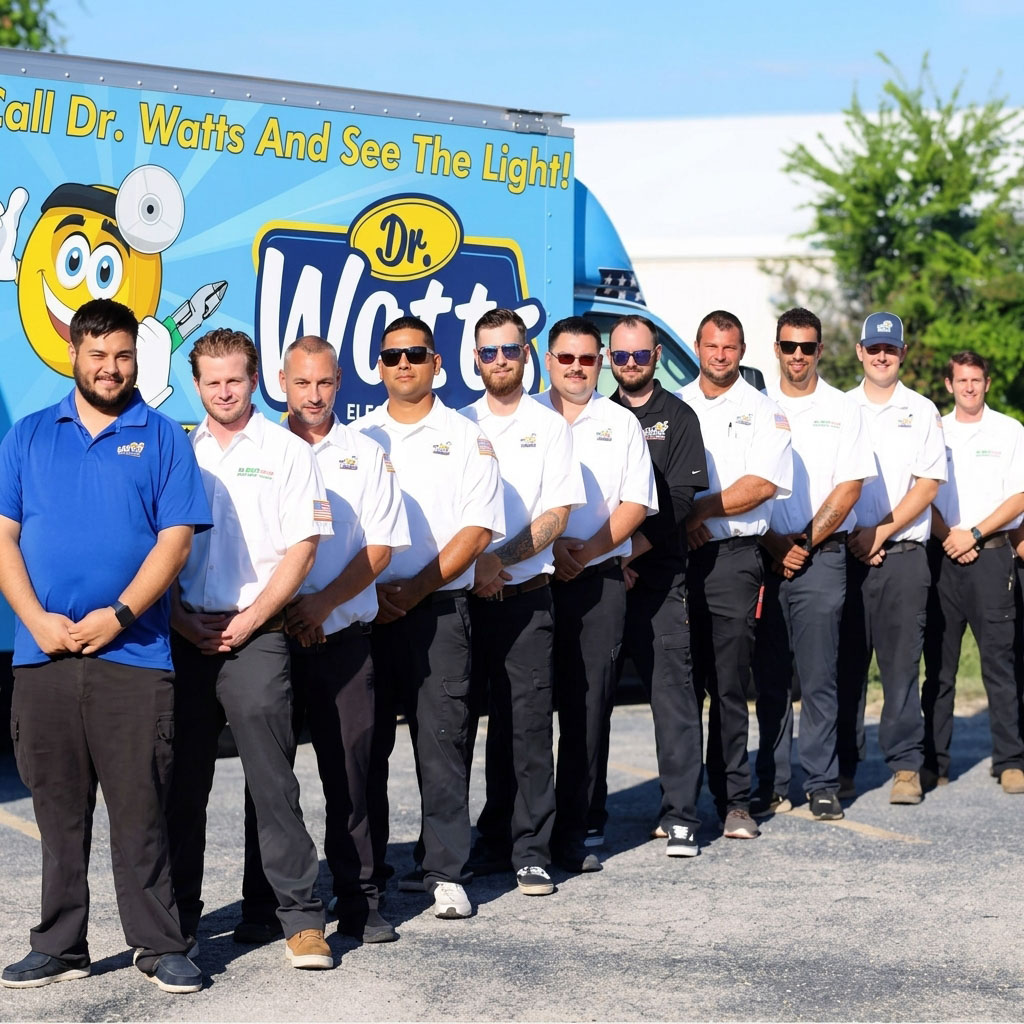
We Pull the Permit: Every Single Time
A permanent standby generator installation in Texas requires a permit through TDLR. Some electricians skip this step. We do not. We pull the permit, schedule the required inspection, and give you a copy of the completed inspection report. Your installation is documented, code-compliant, and on record with the state.
We Know the Backfeed Code
A generator connected to a home without a proper transfer switch can send electricity back onto utility lines and electrocute a lineworker repairing the outage. We take this seriously. Every generator we install includes a transfer switch or interlock kit that meets NEC 2020 Article 702. We do not cut corners on this.
We Size It Right the First Time
We never skip the permit process. Every wiring job we do in Bell County is filed with the right city or county office. The finished work passes inspection. Your project is on record and your home’s value is protected.
100% Satisfaction Guarantee
Every generator installation we complete is backed by our satisfaction guarantee. If something is not right after we leave, we come back and fix it at no additional charge. That commitment is how we have kept over 500 Bell County homeowners returning to Dr. Watts Electric.
Schedule a Generator or Transfer Switch
Installation in Belton, TX
The next power outage is not on your schedule. With a properly installed generator and transfer switch, it does not have to be a crisis either. Dr. Watts Electric serves all of Bell County, TX with flat-rate generator installations, transfer switch wiring, and interlock kit installs.
Questions About Generator
Installation in Belton and Bell County, TX
How much does a generator installation cost in Belton, TX?
The cost depends on the generator type, the size of your home, and whether your panel needs any work first. We give you a flat-rate written estimate after the site visit so there are no surprises. Call (254) 939-3534 for a same-day quote.
Do I need a permit to install a standby generator in Bell County, TX?
Yes. A permanent standby generator installation in Texas requires a permit through TDLR and a licensed electrician to pull and complete it. We handle the full permit process as part of every standby generator job. You do not have to track that yourself.
What is a transfer switch and do I need one to use a generator?
A transfer switch is a device that safely connects a generator to your home’s electrical panel. It prevents backfeed, which is when electricity from your generator flows back onto the utility lines and creates an electrocution risk for lineworkers. You need a transfer switch or an interlock kit every time you connect a generator to your home. This is required by NEC 2020 Article 702.
What is the difference between an automatic and a manual transfer switch?
An automatic transfer switch (ATS) detects the power outage and starts the generator without any action from you. A manual transfer switch (MTS) requires you to flip a switch to transfer power from the generator to your circuits, but it still safely isolates your home from the grid. The right choice depends on your generator type and how much automation you want.
What size generator do I need for my home in Belton, TX?
Generator sizing depends on your home’s total electrical load. We calculate that during the site visit. The most common mistake is buying a generator that is too small to run the full home. We give you the correct size recommendation before you purchase anything.
How long does a standby generator installation take in Bell County?
A full standby generator installation typically takes 1 to 2 days. This includes the concrete pad, gas line connection, ATS installation, panel connection, permit inspection, and full activation testing. We give you a more precise schedule during the estimate visit.
Can I connect my portable generator to my house without a transfer switch in Texas?
No. Connecting a portable generator directly to your home’s panel without a transfer switch or interlock kit creates a backfeed hazard and is illegal under NEC 2020 Article 702. We install interlock kits as a safe, affordable alternative to a full transfer switch for portable generator owners.
What is a generator interlock kit and is it less costly than a transfer switch?
An interlock kit is a metal bracket installed on your electrical panel that prevents your main breaker and generator breaker from being on at the same time. It prevents backfeed and meets NEC code requirements. It is less costly than a full transfer switch and installs in about 1 to 2 hours.
How often should I service my standby generator in Central Texas?
NFPA 110 recommends a weekly self-test and an annual load bank test for standby generators. We perform the annual service visit including oil and filter changes, battery inspection, fuel system service, and ATS function testing. Ask about bundling this service with your Maintenance Agreement for a combined annual rate.
Will my current electrical panel support a generator in Belton, TX?
It depends on your panel’s age and capacity. Many older Bell County homes have 100-amp panels that may need an upgrade before a generator connection is possible. We check your panel during the site visit and tell you exactly what you need before any generator purchase is made.
Does Dr. Watts install generators for rural properties and farms in Bell County?
Yes. We size and install generator systems for rural properties including well pump wiring, agricultural equipment circuits, and whole-property backup power. If your power goes out and your water goes with it, call us. We build the right system for your property.
What happens in my home when the standby generator switches on automatically?
Your automatic transfer switch (ATS) detects the outage and signals the generator to start. Within 10 to 30 seconds, the generator reaches operating speed. The ATS then transfers your home’s electrical load from the utility grid to the generator. Your lights, HVAC, refrigerator, and outlets all resume. When utility power returns, the ATS transfers the load back to the grid and the generator shuts off on its own.
Still have a question about generator installation in Belton or Bell County?
Call us at (254) 939-3534. We pick up.